What Are Applications of Tungsten Alloy Rod?
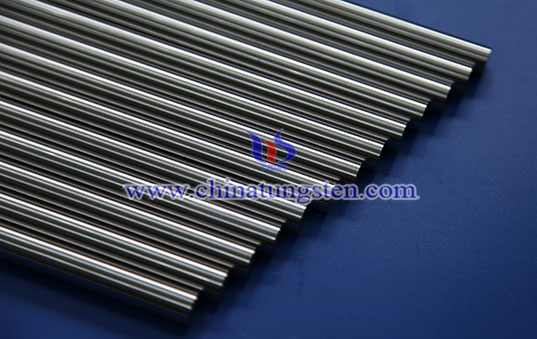
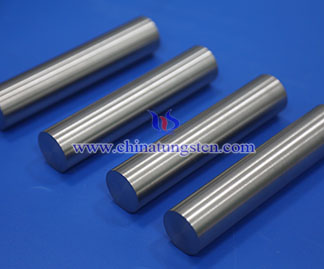
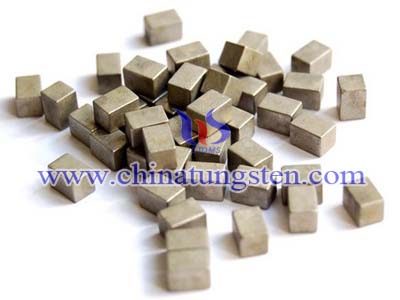
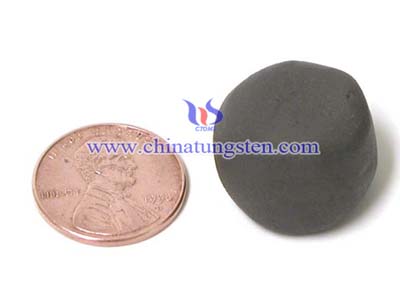
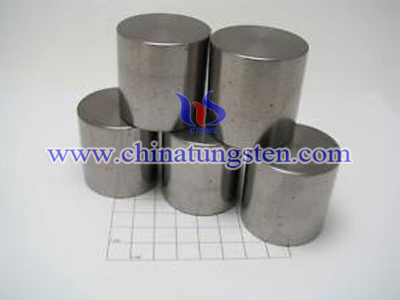
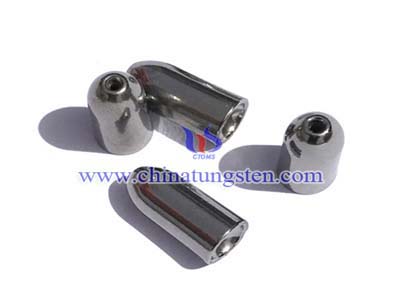
Tungsten alloy rod is manufactured through powder metallurgy, with tungsten (W) as the matrix and nickel (Ni), iron (Fe), or copper (Cu) forming the binder phase. By adding binder elements, tungsten alloy rod improves the brittleness of pure tungsten while maintaining high density, providing high strength, good toughness, excellent machinability, and good dimensional stability. Common types include W-Ni-Fe, W-Ni-Cu, and W-Ni-Fe-Mo tungsten alloy rods. With tungsten content typically ranging from 90% to 97% and density of approximately 16.5–18.8 g/cm³, tungsten alloy rod has wide applications in aerospace counterweights, vibration control, radiation shielding, precision manufacturing, and advanced equipment.
1. Applications of CTIA’s Tungsten Alloy Rod in Aerospace and Precision Counterweights
Aerospace and precision counterweight applications require materials with high density, high specific gravity, good dimensional stability, and precise mass control capability. CTIA’s tungsten alloy rod provides high mass concentration within limited spaces, reducing counterweight component volume while maintaining structural reliability and meeting strict weight distribution requirements.
(1) Tungsten Alloy Rod in Aircraft Balance Weights
Used in aircraft control systems as balance weights, counterweights, and inertial components, providing high density and dimensional stability for precise mass control, reduced component size, and improved flight stability in space-limited structures.
(2) Tungsten Alloy Rod in Satellite Counterweights
Applied in satellite attitude control systems for inertial counterweights, mass balance components, and attitude adjustment components, offering high density, low volume, and long-term dimensional stability for space applications.
(3) Tungsten Alloy Rod in Automotive Balance Weights
Applied in automotive rotating parts such as crankshaft balance weights and high-speed moving mechanism counterweights, enabling optimized mass distribution, vibration reduction, and compact balance structure design through a high mass-to-volume ratio.
(4) Tungsten Alloy Rod in Gyroscope Counterweights
Used in gyroscopes, navigation systems, and precision inertial equipment for inertial components and miniature counterweight components, providing high density, good machinability, and stable physical properties to improve measurement accuracy and operating reliability.
(5) Tungsten Alloy Rod in Sports Equipment Counterweights
Applied in sports equipment such as golf clubs, darts, and fishing equipment for weight adjustment and balance optimization, offering high density, high mechanical strength, and lead-free characteristics compared with traditional lead and steel counterweight materials.
2. Applications of CTIA’s Tungsten Alloy Rod in Vibration Damping
Vibration damping application requires materials with high density, high elastic modulus, and good dimensional stability. CTIA’s tungsten alloy rod provides high inertial mass within limited spaces, improving damping efficiency and meeting requirements for vibration reduction and structural stability.
(1) Tungsten Alloy Rod in TMD Damper
Used as a high-density mass component in Tuned Mass Dampers (TMD), increasing inertial mass to adjust structural vibration frequency and reduce vibration response caused by wind loads and earthquakes. Compared with concrete and steel mass blocks, it provides higher density and reduces installation space.
(2) Tungsten Alloy Rod in CNC Machine Vibration Damping
Applied in Computer Numerical Control (CNC) machine tool holders, spindle balance components, and vibration damping structures, increasing system inertia to reduce machining vibration and improve processing accuracy and surface quality. Compared with conventional alloy steel materials, it achieves the same damping effect with a smaller size.
(3) Tungsten Alloy Rod in High-Speed Railway Vibration Damping
Used in balance components and vibration control parts of high-speed railway equipment, providing high density and stable mechanical properties to control structural vibration and dynamic response while improving operating stability.
(4) Tungsten Alloy Rod in Anti-Vibration Tool Holders
Applied as an internal inertial weight material in anti-vibration tool holders, utilizing high mass density to reduce cutting vibration and improve high-speed machining stability in precision machining and deep-hole machining applications.
3. Applications of CTIA’s Tungsten Alloy Rod in Industrial Precision Manufacturing
Industrial precision manufacturing application requires materials with high hardness, high compressive strength, good wear resistance, and excellent machinability. CTIA’s tungsten alloy rod provides stable performance under high-load conditions and can be precision machined into complex components, meeting requirements for long service life and dimensional stability.
(1) Tungsten Alloy Rod in Mold Inserts
Processed into mold cores, inserts, and wear-resistant structural components, providing high hardness and dimensional stability to improve mold service life in high-precision stamping and forming processes.
(2) Tungsten Alloy Rod in Punches
Applied in stamping die punch components, providing high compressive strength and wear resistance while maintaining structural stability under high-load cyclic conditions.
(3) Tungsten Alloy Rod in High-Speed Cutting Tools
Used in high-speed cutting tools and precision machining components, providing good mechanical properties to reduce deformation and wear during machining and improve tool operating stability.
(4) Tungsten Alloy Rod in Oil Drilling Tools
Applied in wear-resistant components of drilling tools, providing high hardness and wear resistance to improve service life under high-impact, high-wear, and complex operating conditions.
(5) Tungsten Alloy Rod in EDM Electrodes
Used for Electrical Discharge Machining (EDM) electrode manufacturing, providing good electrical conductivity, wear resistance, and machinability for machining complex molds and precision components.
4. Applications of CTIA’s Tungsten Alloy Rod in Medical Radiation Shielding
Medical radiation shielding application requires materials with high density, high atomic number, effective radiation attenuation capability, and good mechanical properties. CTIA’s tungsten alloy rod provides efficient absorption of X-rays and γ-rays while maintaining high strength, wear resistance, and dimensional stability, enabling compact shielding structures and meeting requirements for medical equipment and radiation protection components.
(1) Tungsten Alloy Rod in Medical Radiation Shielding
Processed into shielding blocks, protective components, and collimator structures in medical equipment, providing high density to reduce radiation leakage and improve equipment safety. Compared with lead materials, it offers higher compressive strength and better machining accuracy for medical shielding components requiring high dimensional precision and reliability.
(2) Tungsten Alloy Rod in X-Ray Equipment
Used to manufacture collimators, shielding components, and protective structures in X-ray equipment, providing high atomic number and high density for improved radiation attenuation efficiency while maintaining mechanical performance for long-term operation.
(3) Tungsten Alloy Rod in CT Equipment Shielding
Applied in Computed Tomography (CT) equipment for collimators, rotating components, and precision shielding parts, providing effective radiation protection in limited spaces while meeting requirements for shielding performance and machining precision.
(4) Tungsten Alloy Rod in Radiation Therapy Equipment
Used in radiation source shielding components, shielding structures, and collimator parts for radiation therapy equipment, providing reliable control of high-energy radiation direction and dose distribution while maintaining structural stability under mechanical loads.
(5) Tungsten Alloy Rod in Nuclear Industry
Applied in radiation shielding components, high-density structural parts, and protective components for nuclear equipment, providing high density, high strength, and good environmental stability for applications requiring high material reliability.
5. Applications of CTIA’s Tungsten Alloy Rod in High-Temperature, Vacuum, and Special Equipment
High-temperature, vacuum, and special equipment applications require materials with high-temperature stability, good mechanical properties, low thermal deformation, and dimensional stability. CTIA’s tungsten alloy rod provides reliable performance under elevated temperatures and complex operating conditions, meeting requirements for structural components in vacuum equipment, high-temperature furnaces, semiconductor equipment, and special machinery.
(1) Tungsten Alloy Rod in Vacuum Equipment
Used for structural supports, functional components, and balance components in vacuum equipment, providing low vapor pressure, high density, and good mechanical properties to improve operating stability.
(2) Tungsten Alloy Rod in Vacuum Furnace Components
Applied in load-bearing components, supports, and high-temperature structural parts of vacuum high-temperature furnaces, providing a low coefficient of thermal expansion and good dimensional stability to maintain structural accuracy under prolonged high-temperature conditions.
(3) Tungsten Alloy Rod in Semiconductor Equipment
Used for precision structural parts, counterweight components, and functional components in semiconductor manufacturing equipment, providing high density, heat resistance, and long-term dimensional stability for high-precision applications.
(4) Tungsten Alloy Rod in Rocket Engine Components
Applied in special structural components and inertial control components for rocket engines, providing high density, high strength, and good high-temperature performance under high-temperature, high-load, and strong-vibration conditions.
CTIA GROUP has specialized in tungsten alloy manufacturing for nearly 30 years, providing integrated manufacturing capabilities from tungsten powder raw material selection and control, powder mixing, compaction, and high-temperature liquid phase sintering to rotary swaging, and precision machining. CTIA manufactures tungsten alloy rods in W-Ni-Fe, W-Ni-Cu, and W-Ni-Fe-Mo alloy systems, with customized dimensions, density specifications, and machining tolerances available to meet application requirements in aerospace, medical shielding, precision manufacturing, and advanced equipment.
For any inquiry, please contact tungsten alloy manufacturer: CTIA GROUP
Email: sales@chinatungsten.com
Tel: 0086 592 5129696 / 0086 592 5129595
Website: tungsten-alloy.com
WeChat:

Related Products: