Tungsten Alloy Rod in Nuclear
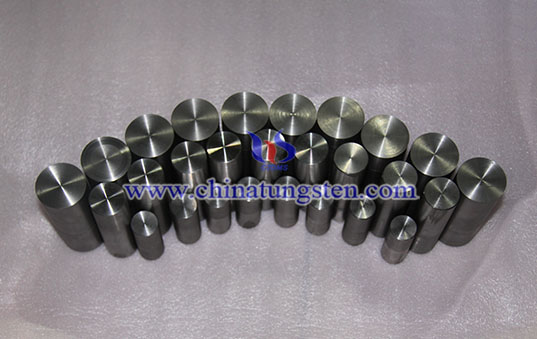
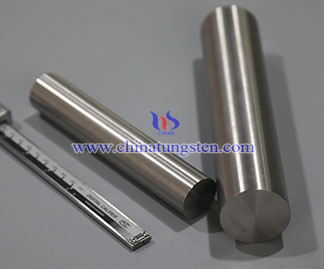
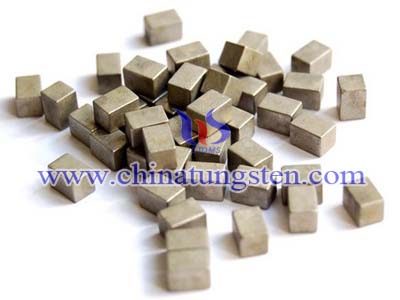
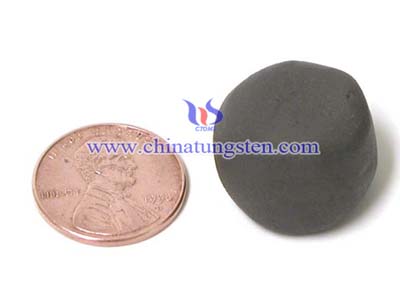
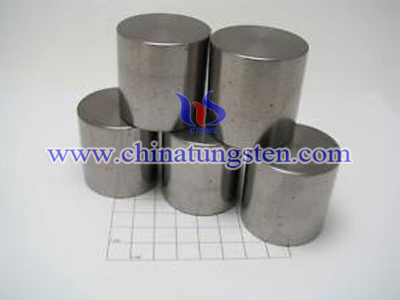
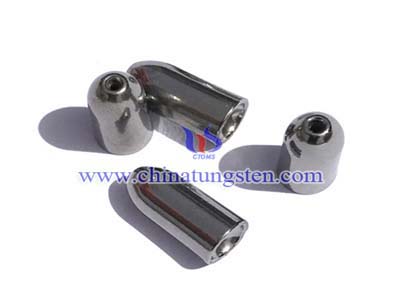
Tungsten alloy rod in nuclear industry is manufactured through powder metallurgy using tungsten (W) as the matrix and nickel (Ni), iron (Fe), and other elements as the binder phase. Featuring excellent mechanical properties and radiation environment adaptability, CTIA’s tungsten alloy rod is used as a material for precision components in nuclear equipment, including isotope shielding components, collimation structures for nuclear detection instruments, local radiation shielding parts, and counterweight components for hot cell remote handling equipment.
1. Characteristics of CTIA’s Tungsten Alloy Rod in Nuclear
(1) Radiation Attenuation Performance
High atomic number of tungsten (Z=74) and high density provide effective attenuation of γ-rays and X-rays, making it suitable for nuclear radiation shielding components.
(2) High-Temperature Stability
High melting point and low coefficient of thermal expansion maintain dimensional stability under high-temperature and long-term operating conditions.
(3) High Strength and Toughness
Compared with pure tungsten, improved impact resistance and machinability meet the mechanical load requirements of nuclear industry components.
(4) Radiation Stability
The lead-free composition maintains stable performance under long-term radiation exposure and provides good operational safety.
2. Applications of CTIA’s Tungsten Alloy Rod in Nuclear
(1) Nuclear Power Plants and Reactor Engineering
Used to manufacture shielding plugs for reactor inspection channels, auxiliary counterweights for control rod drive systems, and protective sleeves for underwater inspection instruments.
(2) Isotope Production and Nuclear Medicine Source Storage
Used for industrial radiography source containers (192Ir/60Co), shielding mandrels for medical isotope transport containers, and source rod locking mechanisms.
(3) Nuclear Waste Treatment and Hot Cell Equipment
Used for remote manipulator balance rods, collimation components for nuclear waste sampling and analysis instruments, and protective components for waste container heads.
(4) High-Energy Physics and Nuclear Research Experiments
Used for beam collimation rods in particle accelerators, local shielding blocks in target chambers, and shielding structures for high-energy radiation detection equipment.
3. Specifications of CTIA’s Tungsten Alloy Rod in Nuclear
CTIA provides tungsten alloy rod grades with 90%–97% tungsten content and density of 16.5–18.8 g/cm³, with customized dimensions and surface conditions available according to nuclear component structures and application requirements.
CTIA GROUP has nearly 30 years of experience in tungsten alloy manufacturing, supported by powder metallurgy and precision machining technologies. CTIA provides customized tungsten alloy rods in various grades, including 90WNiFe, 92.5WNiFe, 95WNiFe, 97WNiFe, 90WNiCu, 92.5WNiCu, 95WNiCu, 92.5WNiFeMo, and 93WNiFeMo, with different dimensions and processing conditions. Featuring high density, high strength, radiation shielding capability, and precision machining performance, CTIA’s tungsten alloy rod meets the reliability, stability, and long-term service requirements of shielding components, counterweights, inertial structures, and precision functional parts in nuclear equipment.
For any inquiry, please contact tungsten alloy manufacturer: CTIA GROUP
Email: sales@chinatungsten.com
Tel: 0086 592 5129696 / 0086 592 5129595
Website: tungsten-alloy.com
WeChat:

Related Products: