High Specific Gravity Tungsten Alloy Rod
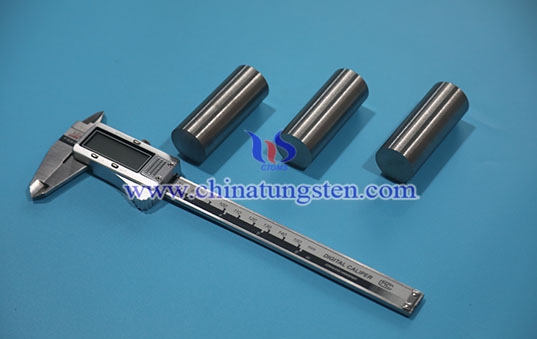
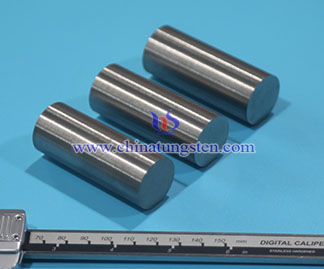
1.What's High Specific Gravity Tungsten Alloy Rod?
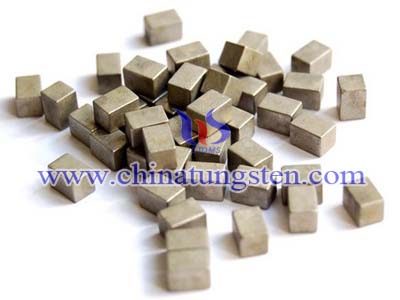
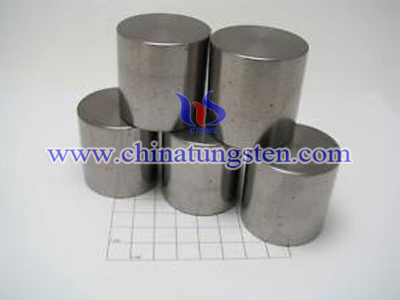
High specific gravity tungsten alloy rod, also known as high density tungsten alloy rod, is manufactured through powder metallurgy using tungsten (W) as the matrix material and adding elements such as nickel (Ni), iron (Fe), or copper (Cu). The tungsten content typically ranges from 90%–97%, with a density of 17.0–18.8 g/cm³, enabling high mass concentration within limited spaces. CTIA’s tungsten alloy rod is mainly classified into tungsten-nickel-iron (W-Ni-Fe) and tungsten-nickel-copper (W-Ni-Cu) series. The W-Ni-Fe series provides better overall mechanical properties, while the W-Ni-Cu series features non-magnetic characteristics and is suitable for applications sensitive to magnetic environments.
2. Characteristics of CTIA's High Specific Gravity Tungsten Alloy Rod
(1) High Mass Concentration Capability: High density allows replacing traditional metals to achieve more compact weight configurations, suitable for counterweight structures with limited space.
(2) Good Comprehensive Performance: Combining strength, toughness, and wear resistance, tensile strength is usually 700-1000 MPa, satisfying long-term load-bearing application demands.
(3) Excellent Dimensional Stability: Low coefficient of thermal expansion of 4.5–5.5×10⁻⁶/K maintains good structural stability under temperature-varying conditions.
(4) Easy Precision Machining: Better machining adaptability compared with pure tungsten material, meeting precision manufacturing requirements such as turning and grinding.
(5) Reliable Shielding Capability: Relying on high atomic number (74) and high mass characteristics of tungsten, it can be used for X-ray and gamma (γ) ray protection components.
3.Applications of CTIA's High Specific Gravity Tungsten Alloy Rod
CTIA's high specific gravity tungsten alloy rod mainly utilizes its high mass-to-volume ratio and stable performance for weight control, inertial adjustment, and specialized functional components.
(1) Aerospace Counterweights: Used for aircraft balance weights, satellite counterweights, gyroscopes, and attitude control system counterweight components.
(2) Vibration Damping and Inertial Components: Used for TMD (Tuned Mass Damper), CNC (Computer Numerical Control) vibration-damping parts, anti-vibration tool holders, and inertial control components.
(3) Medical Protection Components: Used for collimators and shielding structures in X-ray equipment, CT (Computed Tomography) scanners, and radiotherapy equipment.
(4) Engineering and Mechanical Components: Used for oil drilling tools, deep-well drilling tools, wear-resistant parts, mold components, and high-load structural parts.
(5) Electronic and Precision Equipment: Used for EDM (Electrical Discharge Machining) electrodes, vacuum equipment components, and semiconductor equipment precision parts.
4.Specifications of CTIA's High Specific Gravity Tungsten Alloy Rod
(1) Grades:
① 90%W: 90WNiFe, 90WNiCu
② 92.5%W: 92.5WNiFe, 92.5WNiCu, 92.5WNiFeMo
③ 93%W: 93WNiFeMo
④ 95%W: 95WNiFe, 95WNiCu
⑤ 97%W: 97WNiFe
(2) Dimensions: Diameter 3–100 mm, length 100–1000 mm, customizable
(3) Density: 17.0–18.8 g/cm³
(4) Surface Finish: Turned, ground, polished, etc.
CTIA GROUP has specialized in tungsten alloy manufacturing for nearly 30 years and established comprehensive manufacturing and precision machining capabilities for tungsten alloy rods. CTIA provides tungsten alloy rods in various grades, dimensions, and surface conditions according to customer requirements. Through strict control of material composition, density uniformity, and machining accuracy, CTIA ensures stable and reliable product performance for applications in aerospace, medical protection, machinery manufacturing, electronic equipment, and high-end equipment.
For any inquiry, please contact tungsten alloy manufacturer: CTIA GROUP
Email: sales@chinatungsten.com
Tel: 0086 592 5129696 / 0086 592 5129595
Website: tungsten-alloy.com
WeChat:

Related Products: