Tungsten Alloy Rod in Aircraft Balance Weight
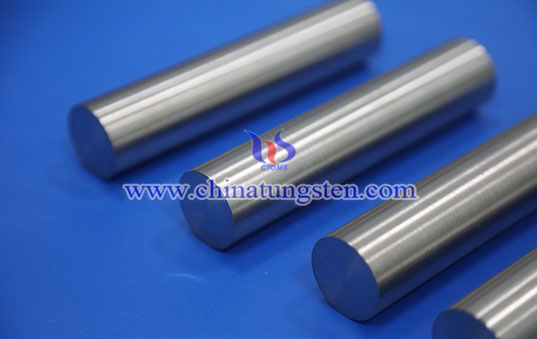
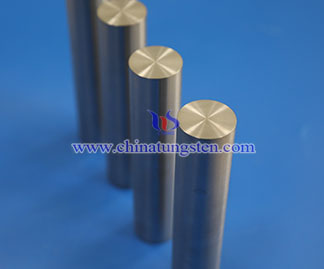
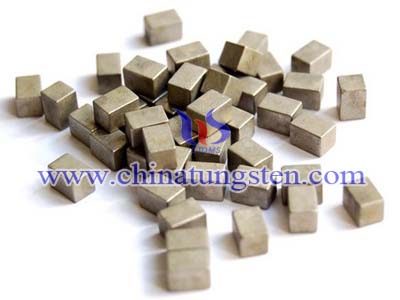
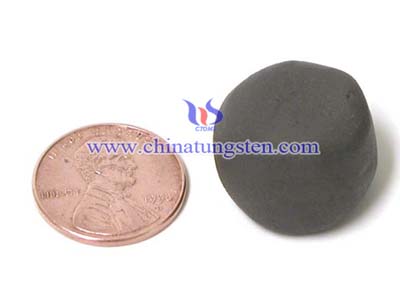
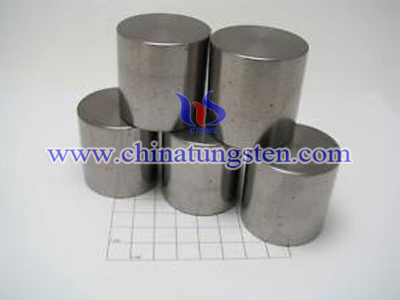
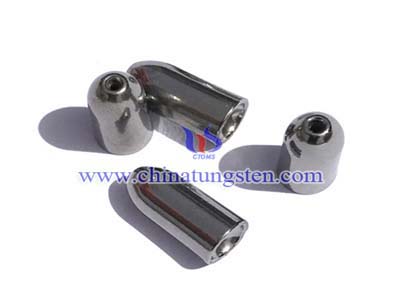
Tungsten alloy rod is high density alloy rod used in aircraft balance weight applications, mainly adopting W-Ni-Fe and W-Ni-Cu alloy systems. The addition of nickel-iron or nickel-copper binder phases improves strength, toughness, and machinability. Featuring high density, high strength, excellent dimensional stability, and good machinability, CTIA’s tungsten alloy rod enables precise weight adjustment within limited installation space, meeting the requirements of aircraft balance weights for weight accuracy, structural stability, and long-term reliability.
1. Characteristics of CTIA’s Tungsten Alloy Rod in Aircraft Balance Weight
(1) High Density and Space Efficiency
A density of 16.5–18.8 g/cm³ enables precise counterweight design within limited installation space, reducing component volume and supporting weight optimization in aircraft structures.
(2) High Strength and Excellent Vibration Resistance
A tensile strength of up to 700–1400 MPa provides good impact resistance and fatigue resistance, allowing long-term operation under vibration, overload, and aerodynamic loads during flight.
(3) Low Thermal Expansion and High Dimensional Stability
A low coefficient of thermal expansion enables stable dimensions under alternating high-altitude low-temperature and engine high-temperature conditions, maintaining long-term balancing accuracy.
(4) Magnetic and Non-Magnetic Options
W-Ni-Fe and W-Ni-Cu grades are available to meet different aircraft system requirements for magnetic interference control.
(5) Environmental Safety and Corrosion Resistance
Lead-free and non-toxic characteristics meet aerospace environmental and safety requirements, while good oxidation and corrosion resistance ensure reliable long-term service performance.
2. Applications of CTIA’s Tungsten Alloy Rod in Aircraft Balance Weight
(1) Control Surface Balance Weights
Used in elevator, aileron, and rudder balance weights to optimize mass distribution and improve aircraft flight stability.
(2) Flight Control System Counterweights
Used in aircraft control mechanisms for precise mass compensation, improving motion balance and control performance.
(3) Wing and Tail Counterweights
Used for local weight adjustment to improve aircraft structural balance and center-of-gravity distribution.
(4) Aerospace Precision Equipment Counterweights
Used in aircraft testing equipment and precision mechanisms for high-accuracy mass compensation and inertia adjustment.
3. Specifications of CTIA’s Tungsten Alloy Rod in Aircraft Balance Weight
(1) Tungsten Content: 90%–97%
(2) Density: 16.5–18.8 g/cm³
(3) Dimensions: Diameter 1–50 mm, length 10–500 mm, customizable
(4) Surface Conditions: Ground, polished, and other conditions available
CTIA GROUP has specialized in tungsten alloy manufacturing for nearly 30 years, with extensive experience in tungsten alloy rod production and precision machining. CTIA supplies tungsten alloy rods in various grades, including 90/92.5/95/97WNiFe, 90/92.5/95WNiCu, and 92.5/93WNiFeMo, with customized dimensions and processing conditions available. Stable material properties and precision machining capabilities enable CTIA’s tungsten alloy rods to meet application requirements in aircraft control systems, aerospace counterweight components, and precision weight adjustment parts.
For any inquiry, please contact tungsten alloy manufacturer: CTIA GROUP
Email: sales@chinatungsten.com
Tel: 0086 592 5129696 / 0086 592 5129595
Website: tungsten-alloy.com
WeChat:

Related Products: