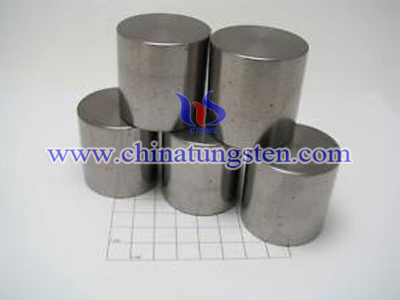
Grades of Tungsten Alloy Rod
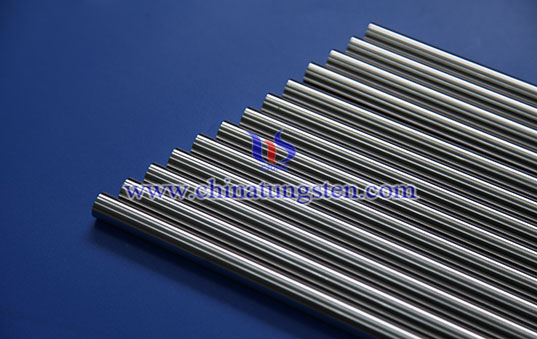
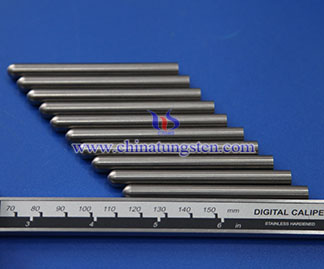
Grades of tungsten alloy rod are mainly classified according to tungsten content, binder phase composition, and alloying elements. Common grades include W-Ni-Fe, W-Ni-Cu, and W-Ni-Fe-Mo series, among which 90WNiFe, 92.5WNiFe, 95WNiFe, and 97WNiFe represent different tungsten content levels. Different tungsten alloy rod grades vary in density, magnetic properties, strength, and machinability, allowing selection according to material performance requirements and operating environments.
1. Grades of CTIA’s W-Ni-Fe Tungsten Alloy Rod
W-Ni-Fe tungsten alloy rod is one of the most widely used tungsten alloy rod series, mainly composed of tungsten, nickel, and iron. The iron-containing binder phase provides magnetic properties, while maintaining high strength, good ductility, and impact resistance.
(1) 90WNiFe Tungsten Alloy Rod
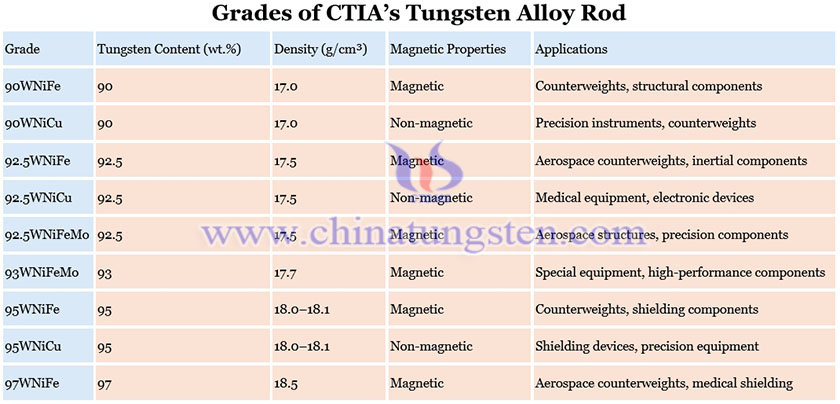
Contains approximately 90% tungsten with a density of about 17.0 g/cm³, providing good overall performance for general counterweights, automotive balance weights, and industrial structural components.
(2) 92.5WNiFe Tungsten Alloy Rod
Contains approximately 92.5% tungsten with a density of about 17.5 g/cm³, offering a balanced combination of density, strength, and machinability for aerospace counterweights, inertial components, and precision mechanical parts.
(3) 95WNiFe Tungsten Alloy Rod
Contains approximately 95% tungsten with a density of about 18.0–18.1 g/cm³, providing higher density and mass concentration capability for space-limited aerospace counterweights, radiation shielding components, and advanced equipment parts.
(4) 97WNiFe Tungsten Alloy Rod
Contains approximately 97% tungsten with a density of about 18.5 g/cm³, providing higher density and radiation shielding capability for aerospace counterweights, medical shielding components, and special protection components requiring high mass.
2. Grades of CTIA’s W-Ni-Cu Tungsten Alloy Rod
W-Ni-Cu tungsten alloy rod mainly consists of tungsten, nickel, and copper. Copper replaces iron as the binder phase, giving this series non-magnetic properties. It combines high density, good machinability, and stable performance, making it suitable for applications requiring low magnetic interference.
(1) 90WNiCu Tungsten Alloy Rod
Contains approximately 90% tungsten with a density of about 17.0 g/cm³, providing good machinability and non-magnetic characteristics for electronic equipment counterweights, precision instrument components, and non-magnetic structural parts.
(2) 92.5WNiCu Tungsten Alloy Rod
Contains approximately 92.5% tungsten with a density of about 17.5 g/cm³, offering stable comprehensive performance for medical equipment, electronic devices, precision instruments, and non-magnetic counterweight components.
(3) 95WNiCu Tungsten Alloy Rod
Contains approximately 95% tungsten with a density of about 18.0–18.1 g/cm³, meeting high mass and non-magnetic performance requirements for medical shielding devices, semiconductor equipment, and high-precision instruments.
3. Grades of CTIA’s W-Ni-Fe-Mo Tungsten Alloy Rod
W-Ni-Fe-Mo tungsten alloy rod is tungsten heavy alloy rod developed by adding molybdenum to the W-Ni-Fe system. The molybdenum addition improves strength, hardness, and overall mechanical performance, making it suitable for applications requiring enhanced mechanical properties.
(1) 92.5WNiFeMo Tungsten Alloy Rod
Contains approximately 92.5% tungsten with high density and good mechanical properties for aerospace structural components, high-performance counterweights, and precision mechanical parts.
(2) 93WNiFeMo Tungsten Alloy Rod
Contains approximately 93% tungsten with molybdenum strengthening to improve overall mechanical performance for high-strength structural components, special equipment parts, and high-reliability engineering applications.
The grade classification of CTIA’s tungsten alloy rods is shown in the picture below:
4. How to Select the Appropriate Tungsten Alloy Rod Grade?
The selection of tungsten alloy rod grades mainly depends on specific application requirements:
(1) High Density: 95WNiFe and 97WNiFe grades with higher tungsten content can be selected to achieve higher density and greater mass concentration.
(2) Non-Magnetic: 90WNiCu, 92.5WNiCu, and 95WNiCu grades can be selected for applications requiring low magnetic interference.
(3) Balanced Performance: 92.5WNiFe, 92.5WNiFeMo, and 93WNiFeMo grades provide a balance of density, strength, and machinability.
CTIA GROUP has specialized in tungsten alloy manufacturing for nearly 30 years and provides tungsten alloy rods in W-Ni-Fe, W-Ni-Cu, and W-Ni-Fe-Mo series, including 90WNiFe, 90WNiCu, 92.5WNiFe, 92.5WNiCu, 92.5WNiFeMo, 93WNiFeMo, 95WNiFe, 95WNiCu, and 97WNiFe grades. With customized grade selection, dimensional machining, and performance adjustment capabilities, CTIA meets application requirements in aerospace counterweights, medical shielding, precision instruments, and advanced equipment.
For any inquiry, please contact tungsten alloy manufacturer: CTIA GROUP
Email: sales@chinatungsten.com
Tel: 0086 592 5129696 / 0086 592 5129595
Website: tungsten-alloy.com
WeChat:

Related Products: