Physical Properties and Characteristics of Tungsten Alloy Rod
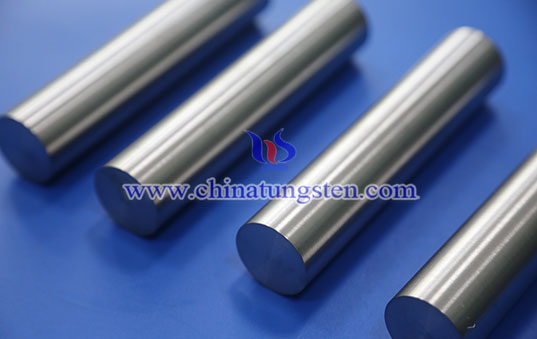
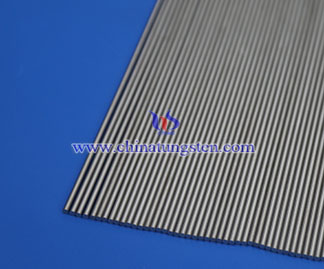
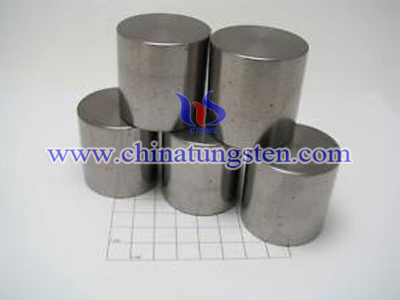
Tungsten alloy rod is high density tungsten alloy manufactured through powder metallurgy, with tungsten (W) as the matrix and nickel (Ni)-iron (Fe) or nickel (Ni)-copper (Cu) as the binder phase. CTIA’s tungsten alloy rod offers physical properties and characteristics such as high density, high strength, good toughness, excellent machinability, and radiation shielding capability, making it suitable for aerospace counterweights, radiation shielding components, precision instruments, and advanced equipment manufacturing. By adjusting the binder phase composition, its magnetic properties can also be controlled to meet different application requirements.
Physical Properties and Characteristics of CTIA’s Tungsten Alloy Rod
1. High Density
Tungsten alloy rod has a density range of 16.5–18.8 g/cm³, which increases with higher tungsten content. For example, 90WNiFe tungsten alloy rod has a density of approximately 17.0 g/cm³, while 97WNiFe tungsten alloy rod can exceed 18.5 g/cm³. The high density results from tungsten’s high atomic mass (183.84) and theoretical density (19.25 g/cm³), enabling high mass concentration within limited spaces and providing a high mass-to-volume ratio for aerospace counterweights, inertial components, and balance components.
2. High Strength and Good Toughness
Tungsten alloy rod forms a stable two-phase structure consisting of tungsten particles as the reinforcing phase and ductile binder phases such as Ni-Fe and Ni-Cu. This structure provides high strength, good toughness, and impact resistance. Typical tensile strength ranges from 700–1400 MPa, and yield strength ranges from 550–1200 MPa, depending on tungsten content, binder phase ratio, and processing conditions. Compared with traditional high-density materials, tungsten alloy rod provides superior mechanical performance while maintaining high density, making it suitable for high-reliability structural components.
3. High Hardness and Wear Resistance
The tungsten hard phase in tungsten alloy rod provides high hardness, improving wear resistance and surface damage resistance. Typical hardness reaches HRC 25–35. Under long-term friction, impact, or cyclic loading conditions, tungsten alloy rod maintains good dimensional stability and service life, making it suitable for wear-resistant parts, precision molds, inertial components, and industrial equipment components.
4. Excellent Radiation Shielding Performance
Tungsten’s high atomic number (74) and high density provide tungsten alloy rod with excellent absorption and shielding capability against X-rays and γ-rays. The high linear attenuation coefficient effectively reduces high-energy radiation penetration. Compared with traditional lead shielding materials, tungsten alloy provides higher density, mechanical strength, and wear resistance, enabling more compact shielding designs while avoiding the toxicity and environmental concerns associated with lead materials. It is suitable for medical equipment, industrial inspection equipment, and radiation protection components.
5. Good Thermal Stability
Tungsten alloy rod features a low coefficient of thermal expansion (4.5–5.8×10⁻⁶/K), maintaining good dimensional stability under temperature variations. It also provides certain thermal conductivity, with typical values of approximately 80–120 W/(m·K), meeting the requirements of precision structural components and industrial parts requiring high thermal stability.
6. Good Machinability
The addition of nickel, iron, copper, and other binder elements improves the plasticity and machinability of CTIA’s tungsten alloy rod compared with pure tungsten. CTIA can process tungsten alloy rods through turning, grinding, rotary swaging, polishing, and other precision machining methods, providing customized dimensions, tolerance grades, and surface finishes according to application requirements for complex structural components.
7. Good Corrosion Resistance
Tungsten alloy rod provides good environmental stability. The Ni-Fe or Ni-Cu binder phase improves material densification and corrosion resistance. The high-density structure formed through powder metallurgy reduces porosity and limits corrosive media penetration, improving long-term service stability in humid environments, industrial media, and complex operating conditions.
8. Adjustable Magnetic Properties
Tungsten alloy rod exhibits different magnetic properties depending on the binder phase system. WNiFe series tungsten alloy rod contains iron and has magnetic properties, with magnetic permeability and saturation magnetic induction affected by iron content. It is suitable for components requiring magnetic response characteristics. WNiCu series tungsten alloy rod uses copper as the binder phase and contains no ferromagnetic elements, providing non-magnetic properties for medical equipment, electronic devices, and magnetically sensitive environments.
CTIA GROUP has specialized in tungsten alloy manufacturing for nearly 30 years, with capabilities in powder metallurgy, and precision machining of tungsten alloy rods. CTIA’s tungsten alloy rods include WNiFe, WNiCu, and WNiFeMo series, offering high density, high strength, good toughness, excellent machinability, and radiation shielding capability. Customized grades, dimensions, and surface conditions are available to meet application requirements in aerospace counterweights, medical shielding, precision manufacturing, and advanced equipment.
For any inquiry, please contact tungsten alloy manufacturer: CTIA GROUP
Email: sales@chinatungsten.com
Tel: 0086 592 5129696 / 0086 592 5129595
Website: tungsten-alloy.com
WeChat:

Related Products: