Tungsten Alloy Rod in Vibration Control
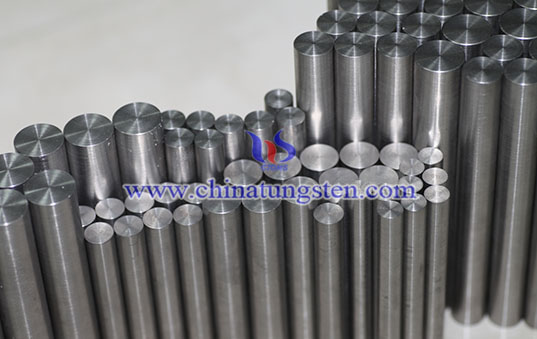
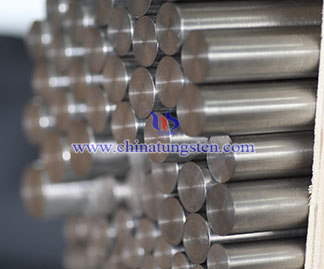
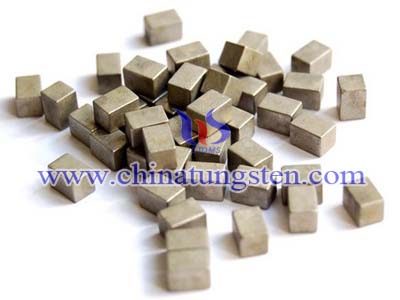
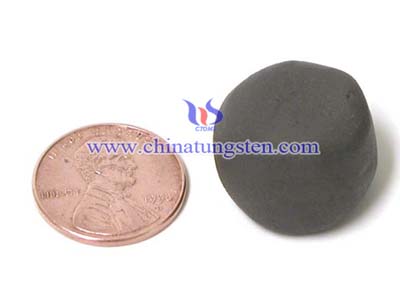
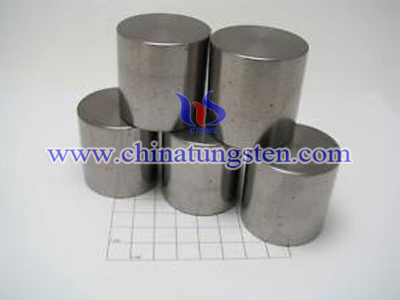
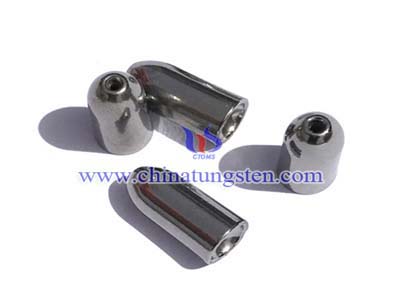
Tungsten alloy rod in vibration control is high density tungsten alloy rod manufactured through powder metallurgy processes and used as an inertial mass component in structural vibration control systems. It provides substantial inertial mass within compact spaces, enabling dynamic response adjustment, vibration reduction, and improved operational stability of equipment. CTIA's tungsten alloy rod features high strength, reliable dimensional stability, and favorable machinability. It can be processed into inertial mass blocks, counterweight assemblies, and vibration control components, serving widespread applications in vibration control systems across architectural structures, rail transit, aerospace, mechanical equipment, and precision instruments.
1. Characteristics of CTIA’s Tungsten Alloy Rod in Vibration Control
(1) High Density and Mass Efficiency
Density of 16.5–18.8 g/cm³ provides large mass within limited space, enhancing inertial effects in vibration control systems and reducing component volume.
(2) High Strength and Fatigue Resistance
Tensile strength of up to 700–1400 MPa enables stable performance under long-term vibration, impact, and cyclic loading conditions.
(3) Excellent Dimensional Stability
Low coefficient of thermal expansion maintains dimensional accuracy under temperature variations and long-term operating conditions, ensuring consistent vibration control performance.
(4) Stable Dynamic Performance
High density and elastic modulus improve the stability of inertial components and optimize vibration response during equipment operation.
(5) Good Machinability
Machining capability through turning, milling, and grinding processes enables the production of inertial mass blocks, counterweight components, and structural parts with different geometries.
2. Applications of CTIA’s Tungsten Alloy Rod in Vibration Control
(1) Architectural Structural Vibration Control
Used as inertial mass elements in Tuned Mass Dampers (TMD) for high-rise buildings, bridges, and large-scale structures to mitigate wind-induced vibration and structural responses.
(2) Rail Transit Vibration Control
Used in inertial counterweight components for high-speed trains, Electric Multiple Units (EMUs), and railway equipment to improve running stability and passenger comfort.
(3) Aerospace Vibration Control
Applied in inertial mass assemblies for satellites, aerospace equipment, and aircraft structures to improve attitude stability and dynamic performance.
(4) Mechanical Equipment Vibration Control
Used in balancing components for rotating machinery, precision equipment, and heavy machinery to reduce operational vibration and improve equipment reliability.
(5) Precision Instrument Vibration Control
Applied in balance weights and inertial elements for gyroscopes, measuring devices, and high-precision instruments to maintain measurement stability.
3. Specifications of CTIA’s Tungsten Alloy Rod in Vibration Control
(1) Tungsten Content: 90%–97%
(2) Density: 16.5–18.8 g/cm³
(3) Dimensions: Diameter 5–100 mm, length 20–1000 mm, customizable
(4) Surface Conditions: Ground, polished, etc.
CTIA GROUP has specialized in tungsten alloy manufacturing for nearly 30 years, providing tungsten alloy rods with customized grades, dimensions, and processing conditions. Available grades include 90WNiFe, 92.5WNiFe, 95WNiFe, 97WNiFe, 90WNiCu, 92.5WNiCu, 95WNiCu, 92.5WNiFeMo, and 93WNiFeMo. CTIA’s tungsten alloy rods combine high density, high strength, fatigue resistance, and precision machining capabilities to meet inertial mass adjustment and dynamic stability requirements in vibration control systems for buildings, transportation, aerospace, mechanical equipment, and precision instruments.
For any inquiry, please contact tungsten alloy manufacturer: CTIA GROUP
Email: sales@chinatungsten.com
Tel: 0086 592 5129696 / 0086 592 5129595
Website: tungsten-alloy.com
WeChat:

Related Products: