Tungsten Alloy Rod
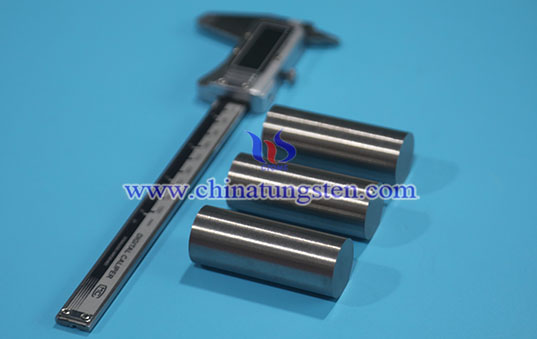
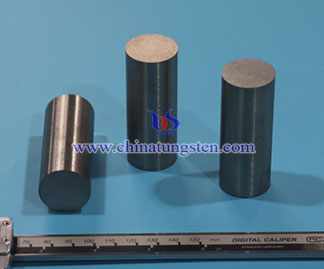
1. What's Tungsten Alloy Rod?
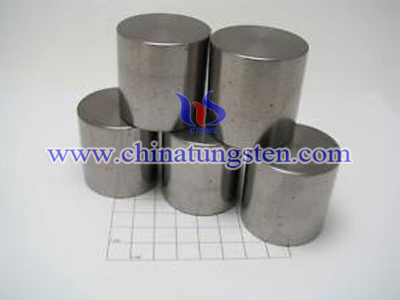
Tungsten alloy rod, also known as high density tungsten alloy rod or high specific gravity tungsten alloy rod, is manufactured through powder metallurgy using tungsten (W) as the matrix material. Based on different application requirements, CTIA optimizes material performance by adopting nickel (Ni)-iron (Fe) or nickel (Ni)-copper (Cu) binder systems. This enables the material to maintain high density, high melting point, low coefficient of thermal expansion, and excellent radiation absorption capability while providing good toughness, strength, and machinability. CTIA’s tungsten alloy rod is mainly used in aerospace counterweights, medical radiation shielding, precision manufacturing, vibration damping, electronic equipment, and high-end equipment applications.
2. Material Types of CTIA’s Tungsten Alloy Rod
CTIA’s tungsten alloy rod is mainly classified into two series according to binder system and application requirements: W-Ni-Fe series and W-Ni-Cu series.
(1) W-Ni-Fe Tungsten Alloy Rod
W-Ni-Fe tungsten alloy rod consists mainly of tungsten, nickel, and iron. This magnetic tungsten alloy provides high strength, good toughness, and excellent machinability, making it suitable for aerospace counterweights, vibration damping components, inertial components, and structural parts.
(2) W-Ni-Cu Tungsten Alloy Rod
W-Ni-Cu tungsten alloy rod consists mainly of tungsten, nickel, and copper. This non-magnetic tungsten alloy offers good thermal conductivity, electrical conductivity, and electromagnetic compatibility, making it suitable for electronic equipment, precision instruments, and special engineering applications.
CTIA provides various grades of tungsten alloy rod according to different application requirements, including 90WNiFe, 90WNiCu, 92.5WNiFe, 92.5WNiCu, 92.5WNiFeMo, 93WNiFeMo, 95WNiFe, 95WNiCu, and 97WNiFe.
3. Manufacturing Process of CTIA’s Tungsten Alloy Rod
CTIA’s tungsten alloy rod is mainly manufactured through the powder metallurgy process. The manufacturing process involves strict control of material composition, powder mixing, compaction, high-temperature sintering, and precision machining to achieve stable material properties and dimensional accuracy. The main manufacturing steps include:
(1) Raw Material Mixing
High-purity tungsten powder is uniformly mixed with nickel powder, iron powder, or copper powder according to the specified composition ratio to ensure consistent element distribution throughout the alloy.
(2) Compaction and Forming
The mixed powders are compacted into rod-shaped green compacts through die pressing or Cold Isostatic Pressing (CIP), improving the density uniformity of the compact and providing a foundation for subsequent sintering.
(3) Liquid Phase Sintering
Liquid phase sintering is performed under a high-temperature protective atmosphere, allowing the nickel-iron or nickel-copper binder phase to fill the gaps between tungsten particles and improve material densification and overall performance. After optimized processing, the density typically reaches 17.0–18.8 g/cm³.
(4) Precision Machining
The rod is processed through turning, grinding, cutting, drilling, polishing, and other machining operations to achieve different dimensional tolerances and surface finish requirements.
4. Performance Characteristics of CTIA’s Tungsten Alloy Rod
(1) High Density
The density reaches 17.0–18.8 g/cm³, approaching pure tungsten (19.25 g/cm³), enabling high mass concentration in limited spaces and making it suitable for compact weight applications.
(2) High Strength
The material provides a tensile strength of 700–1000 MPa, along with excellent compressive strength and wear resistance for high-load operating conditions.
(3) Excellent Radiation Shielding Performance
The high atomic number (74) and dense structure of tungsten provide excellent absorption capability against X-rays and gamma rays, making it suitable for radiation shielding components.
(4) Good Machinability
The nickel-iron or nickel-copper binder phase improves toughness and allows precision machining processes such as turning, grinding, and other customized processing methods.
(5) High Dimensional Stability
The low coefficient of thermal expansion of approximately 5.0–6.5 × 10⁻⁶/K minimizes dimensional changes caused by temperature variations and supports precision equipment applications.
5. Applications of CTIA’s Tungsten Alloy Rod
(1) Aerospace Counterweights
Used in aircraft balance weights, satellite counterweights, and attitude control components, tungsten alloy rod provides precise mass adjustment through its high density and excellent weight concentration capability.
(2) Vibration Damping and Inertial Control
Applied in Tuned Mass Damper (TMD) systems, CNC machine damping components, high-speed rail vibration control parts, anti-vibration tool holders, and inertial components to improve equipment stability and operational accuracy.
(3) Medical and Industrial Radiation Shielding
Used in X-ray equipment, Computed Tomography (CT) systems, radiotherapy equipment, and industrial radiation shielding components due to tungsten’s high atomic number and excellent radiation absorption capability.
(4) Precision Mechanical Manufacturing
Applied in mold inserts, punches, high-speed cutting tool components, and wear-resistant structural parts that require high strength, hardness, and wear resistance.
(5) Electronic Equipment and Vacuum Systems
Used in electronic equipment, vacuum systems, and special engineering components requiring high density, dimensional stability, and reliable service performance.
6. Specifications of CTIA’s Tungsten Alloy Rod
(1) Grades
① W-Ni-Fe Series: 90WNiFe, 92.5WNiFe, 95WNiFe, 97WNiFe
② W-Ni-Cu Series: 90WNiCu, 92.5WNiCu, 95WNiCu
③ W-Ni-Fe-Mo Series: 92.5WNiFeMo, 93WNiFeMo
(2) Dimensions
① Diameter: 3–100 mm, customizable
② Length: 100–1000 mm, customizable
(3) Density
17.0–18.8 g/cm³
(4) Surface Conditions
Ground, polished, and other surface finishes are available.
CTIA GROUP has specialized in tungsten alloy manufacturing for nearly 30 years. With advanced powder metallurgy and precision machining processes, CTIA offers integrated manufacturing capabilities covering raw material control, powder formulation, sintering and forming, and precision machining. CTIA provides tungsten alloy rod in various grades, dimensions, and customized configurations. Through strict control of tungsten content, density, dimensional accuracy, and microstructure, CTIA’s tungsten alloy products meet the application requirements of aerospace, medical equipment, industrial manufacturing, electronic equipment, and high-end equipment fields.
For any inquiry, please contact tungsten alloy manufacturer: CTIA GROUP
Email: sales@chinatungsten.com
Tel: 0086 592 5129696 / 0086 592 5129595
Website: tungsten-alloy.com
WeChat:

Related Products: