Q&A on Tungsten Alloy Rod
I. Basic Concepts of Tungsten Alloy Rods
Q1: What Is a Tungsten Alloy Rod?
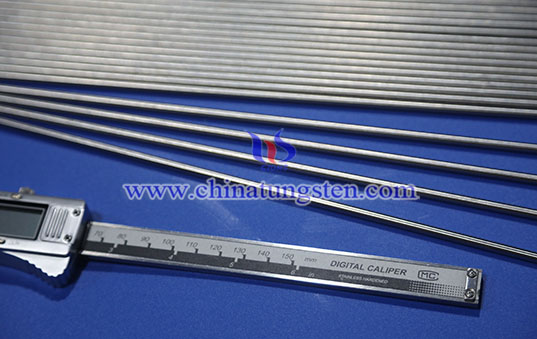
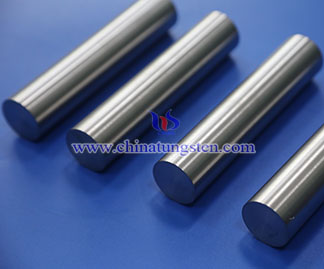
A tungsten alloy rod, also known as a tungsten heavy alloy rod, is a high-density engineering material primarily composed of refractory tungsten (W), with metals such as nickel (Ni), iron (Fe), copper (Cu), and cobalt (Co) used as binder phases. It is manufactured through powder metallurgy processes. Compared with conventional pure tungsten rods, tungsten alloy rods not only retain the characteristics of tungsten, including high density, high melting point, high elastic modulus, and excellent radiation resistance, but also significantly improve the material’s ductility, toughness, machinability, and impact resistance. As a result, tungsten alloy rods have become important structural materials in aerospace, defense and military industries, medical equipment, petroleum, electronics, power generation, nuclear industry, and high-end equipment manufacturing.
In industrial applications, commonly used tungsten alloy rods generally contain 90%–97% tungsten. According to the composition of the binder phase, they can be divided into several series, including W-Ni-Fe, W-Ni-Cu, and W-Ni-Co. Among them, the W-Ni-Fe system offers the best overall combination of properties and is currently the most widely used type. The W-Ni-Cu system is non-magnetic and offers good corrosion resistance, making it suitable for electronics, medical equipment, and magnetic-field environments. The W-Ni-Co system provides higher strength but is relatively more difficult to machine.
More details are available in the document below.
Q2: What Is the Difference Between Tungsten Alloy Rods and Pure Tungsten Rods?
Although both tungsten alloy rods and pure tungsten rods are primarily composed of tungsten, they differ significantly in chemical composition, microstructure, manufacturing process, mechanical properties, machinability, and application fields. There is no simple distinction in terms of which material is better; rather, each is suitable for different engineering requirements.
(1) In terms of chemical composition, pure tungsten rods are generally manufactured from high-purity tungsten powder, with a tungsten content typically no lower than 99.9%, and are essentially single-metal materials. Tungsten alloy rods, on the other hand, contain approximately 3%–10% nickel, iron, copper, or cobalt as binder-phase elements, with a typical tungsten content of 90%–97%. Although these binder-phase elements account for only a relatively small proportion of the material, they significantly change its microstructure and overall properties.
(2) In terms of manufacturing processes, pure tungsten rods are mainly produced by powder metallurgy sintering, followed by plastic processing methods such as forging, rolling, and drawing. Their microstructure is primarily composed of interconnected tungsten grains. Tungsten alloy rods, by contrast, are manufactured through liquid-phase sintering. During sintering, the liquid binder phase promotes the rearrangement and densification of tungsten particles, ultimately forming a two-phase structure in which tungsten particles are distributed throughout the binder-phase matrix. This microstructure enables tungsten alloys to combine high density with relatively good strength and ductility.
More details are available in the document below.
3: What Are the Main Grades of Tungsten Alloy Rods?
Tungsten alloy rods are a class of high-performance tungsten-based materials formed by using tungsten (W) as the matrix and adding elements such as nickel, iron, copper, rhenium, thorium, cerium, and lanthanum. Depending on the alloy system, strengthening mechanism, and application field, they can be divided into several series, including high-density tungsten alloys, tungsten-copper alloys, rare-earth tungsten alloys, and tungsten-rhenium alloys.
Among them, high-density tungsten alloys are mainly used for counterweights, radiation shielding, and inertial devices; tungsten-copper alloys combine electrical conductivity, thermal conductivity, and resistance to arc erosion; rare-earth tungsten and thoriated tungsten materials are mainly used as welding electrodes; while tungsten-rhenium alloys are widely used in high-temperature temperature measurement, aerospace, nuclear industry, and other fields. At present, the common grades of tungsten alloy rods in industrial production and international trade mainly include the following categories.
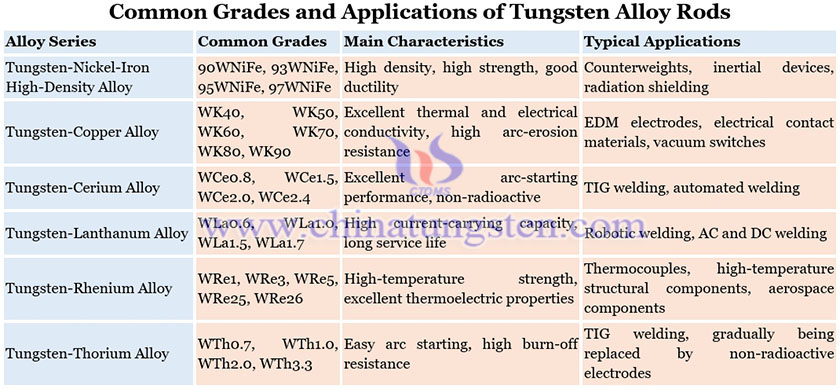
From the perspective of market applications, tungsten-nickel-iron high-density alloys represent the largest-demand category of tungsten alloy rods. Their tungsten content is typically 90%–97%, with nickel and iron making up most of the remainder. They combine a density close to that of pure tungsten with significantly better machinability than pure tungsten, and are therefore widely used in aerospace counterweights, missile balance weights, medical radiation shielding, oil-well logging weights, and high-speed rotating components. Among these grades, 90WNiFe has the best ductility and is suitable for applications requiring subsequent machining or exposure to relatively high impact loads. 95WNiFe and 97WNiFe have higher densities and are more suitable for precision counterweight systems where strict requirements are imposed on volume and weight.
More details are available in the document below.
Q4: Why Are They Called High-Density Tungsten Alloys?
High-density tungsten alloys (HDTA) are named for their density, which is significantly higher than that of most engineering metals and is surpassed among commonly used metallic materials only by pure tungsten and a small number of precious metals. The density of high-density tungsten alloys can reach 16.5–18.75 g/cm³, compared with approximately 7.85 g/cm³ for ordinary carbon steel, approximately 7.9–8.0 g/cm³ for stainless steel, 11.34 g/cm³ for lead, and only 2.70 g/cm³ for aluminum. Therefore, for the same volume, high-density tungsten alloys can provide substantially greater mass. This is the fundamental reason why they are called high-specific-gravity or high-density tungsten alloys. The density comparison of different materials is shown below:
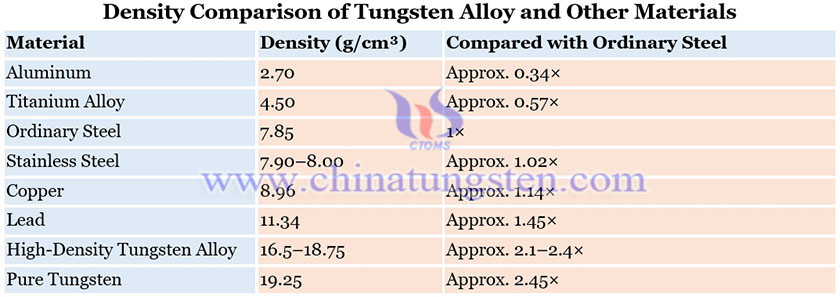
In terms of composition, high-density tungsten alloys are not pure tungsten. They generally contain 90%–98% tungsten as the primary component, with a small amount of nickel, iron, or nickel and copper as the binder phase. They are typically produced through liquid-phase sintering to form a two-phase microstructure. The tungsten particles form the high-density skeleton, while the nickel-iron or nickel-copper matrix provides bonding and toughening. As a result, the material retains a density close to that of pure tungsten while overcoming the high room-temperature brittleness and poor machinability of pure tungsten. High-density tungsten alloys therefore combine high density, high strength, and good machinability.
More details are available in the document below.
Q5: Is a Higher Tungsten Content Always Better for Tungsten Alloy Rods?
Not necessarily. A higher tungsten content does not automatically mean better overall performance for tungsten alloy rods. Instead, the material needs to achieve a balance among density, strength, hardness, toughness, machinability, and cost according to the specific operating conditions. Common high-density tungsten alloys used in industry generally belong to the W-Ni-Fe or W-Ni-Cu systems, with tungsten contents typically ranging from 85% to 98%. Grades containing 90%, 92.5%, 95%, and 97% tungsten are among the most widely used. Different tungsten contents mean different proportions of tungsten particles and binder phases, and therefore different material properties.
First, in terms of density, material density continuously increases as the tungsten content rises. Pure tungsten has a density of approximately 19.25 g/cm³, while 90% tungsten alloy generally has a density of about 17.0–17.3 g/cm³, 95% tungsten alloy about 18.0 g/cm³, and 97% tungsten alloy can reach more than 18.5 g/cm³. Therefore, for products requiring the highest possible mass per unit volume, such as aerospace inertial counterweights, high-end gyroscope counterweights, oil-well logging weights, and kinetic-energy armor-piercing penetrators, materials with higher tungsten content offer significant advantages.
More details are available in the document below.
Q&A List:
I. Basic Concepts of Tungsten Alloy Rods
Q1: What Is a Tungsten Alloy Rod?
Q2: What Is the Difference Between Tungsten Alloy Rods and Pure Tungsten Rods?
Q3: What Are the Main Grades of Tungsten Alloy Rods?
Q4: Why Are They Called High-Density Tungsten Alloys?
Q5: Is a Higher Tungsten Content Always Better for Tungsten Alloy Rods?
Q6: Are Tungsten Alloy Rods Radioactive?
Q8: What Are the Available Appearance Forms of Tungsten Alloy Rods?
II. Performance Parameters of Tungsten Alloy Rods
Q9: What Is the Density Range of Tungsten Alloy Rods?
Q10: What Is the Melting Point of Tungsten Alloy Rods?
Q11: What Is the Hardness of Tungsten Alloy Rods?
Q12: What Is the Tensile Strength of Tungsten Alloy Rods?
Q13: What Are the Electrical Conductivity and Thermal Conductivity of Tungsten Alloy Rods?
Q14: What Is the Coefficient of Thermal Expansion of Tungsten Alloy Rods?
Q15: Is Tungsten Alloy Rod Corrosion Resistant?
Q16: How Do Different Dopants Affect Performance?
III. Manufacturing Processes of Tungsten Alloy Rods
Q17: What Are the Main Manufacturing Processes for Tungsten Alloy Rods?
Q18: How Much Does the Sintering Process Affect the Quality of Tungsten Alloy Rods?
Q19: What Is Rotary Swaging? How Does It Improve the Performance of Tungsten Alloy Rods?
Q20: Can Tungsten Alloy Rods Be Heat Treated?
IV. Product Standards for Tungsten Alloy Rods
Q21: What International Standards Apply to Tungsten Alloy Rods?
Q22: What National Standards Apply to Tungsten Rods in China?
Q23: How Strict Are the Dimensional Tolerances for Tungsten Alloy Rods?
Q23A: What Are the Main Factors Affecting Dimensional Tolerance of Tungsten Alloy Rods?
V Inspection Methods for Tungsten Alloy Rods
Q24: How Is the Density of Tungsten Alloy Rods Measured?
Q25: How Is the Hardness of Tungsten Alloy Rods Tested?
Q26: How Are Internal Defects in Tungsten Alloy Rods Detected?
Q27: How Is the Chemical Composition of Tungsten Alloy Rods Analyzed?
Q28: How Is the Grain Size of Tungsten Alloy Rods Measured?
Q29: How Is the High-Temperature Performance of Tungsten Alloy Rods Evaluated?
VI Applications of Tungsten Alloy Rods
Q30: What Are the Main Applications of Tungsten Alloy Rods in the Military Industry?
Q31: What Are the Applications of Tungsten Alloy Rods in the Electronics Industry?
Q32: What Is the Role of Tungsten Alloy Rods in High-Temperature Furnaces?
Q33: How Are Tungsten Alloy Rods Used in the Medical Industry?
Q34: What Role Do Tungsten Heavy Alloy Rods Play in Aerospace?
Q35: What Are the Advantages of Using Tungsten Heavy Alloy Rods for Welding Electrodes?
Q36: How Are Tungsten Alloy Rods Used in the Mold Industry?
Q37: Where Are Tungsten Alloy Rods Used in the Automotive Industry?
VII. Use and Safety of Tungsten Alloy Rods
Q38: Are Tungsten Alloy Rods Toxic?
Q39: Are There Any Safety Precautions for Processing Tungsten Alloy Rods?
Q40: Are Tungsten Alloy Rods Prone to Fracture?
Q40A What Are the Main Sources of Fracture Risk in Tungsten Alloys?
Q40B How Can the Fracture Resistance of Tungsten Alloy Rods Be Improved?
Q41: How Should Tungsten Alloy Rods Be Stored?
VIII. Customization and Procurement of Tungsten Alloy Rods
Q42: What Are the Available Dimensions and Specifications of Tungsten Alloy Rods?
Q43: What Surface Finishes Are Available for Tungsten Alloy Rods?
Q44: How Should the Type of Tungsten Alloy Rod Be Selected According to the Application?
Q45: Does CTIA GROUP Offer Custom Tungsten Alloy Rod Services?
IX. Common Misconceptions About Tungsten Alloy Rods
Q46: Are Tungsten Alloy Rods the Same as Cemented Carbide Rods?
Q47: Is a Tungsten Alloy Rod the Same Kind of Weapon as Rods from God?
Q48: Can Tungsten Alloy Rods Be Used to Make Jewelry?
Q49: Is a Heavier Tungsten Alloy Rod Always Better?
Q50: Why Do Tungsten Alloy Rod Prices Vary So Much?
How to Customize and Purchase Tungsten Alloy Rods?
Tungsten Alloy Rod Customization and Procurement Requirements Checklist
Tungsten Alloy Rod Procurement Information – Quick Inquiry Form
Read More: Top Q&A on Tungsten Alloy Rod.pdf
For any inquiry, please contact tungsten alloy manufacturer: CTIA GROUP
Email: sales@chinatungsten.com
Tel: 0086 592 5129696 / 0086 592 5129595
Website: tungsten-alloy.com
WeChat:

Related Products: