Sintered Tungsten Alloy Rod
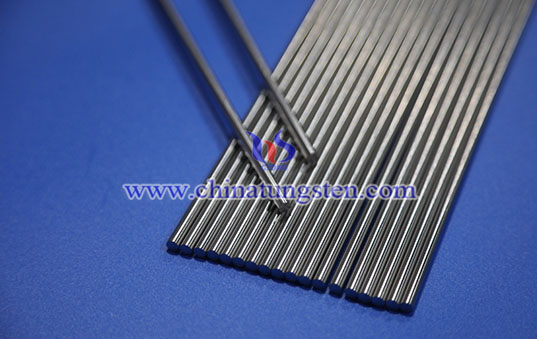
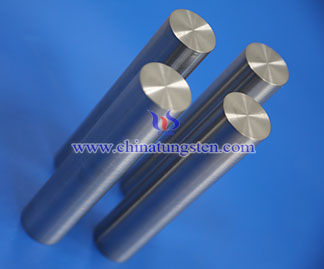
1. What's Sintered Tungsten Alloy Rod?
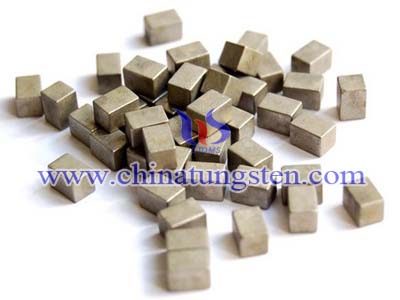
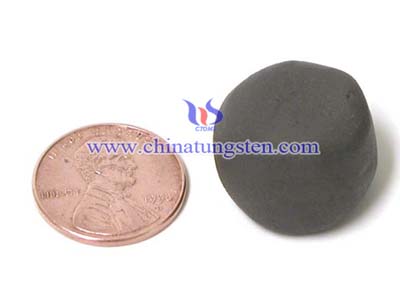
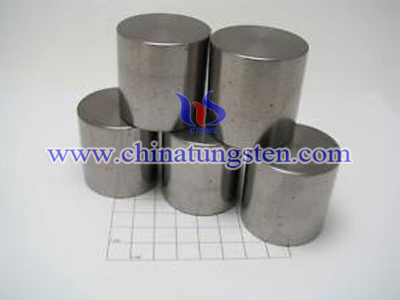
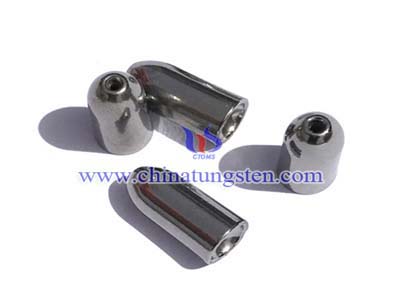
Sintered tungsten alloy rod is tungsten alloy rod manufactured through powder metallurgy processes, in which tungsten powder and binder phase powders are mixed, compacted, and sintered to obtain the final rod. Tungsten (W) is the main component, with different binder systems such as nickel (Ni)-iron (Fe) or nickel (Ni)-copper (Cu) used to achieve specific performance characteristics. CTIA’s sintered tungsten alloy rod features uniform microstructure, stable density, high dimensional accuracy, and good machinability, serving as a basic material for counterweights, structural components, and precision parts.
2. Characteristics of CTIA’s Sintered Tungsten Alloy Rod
(1) High Density and Mass Concentration Capability
Density of 17.0–18.8 g/cm³ enables high mass concentration within limited space, meeting compact counterweight requirements.
(2) Uniform and Stable Microstructure
Sintering process densifies the internal structure and improves composition uniformity, providing stable and reliable performance.
(3) Good Mechanical Properties
Good strength, toughness, and wear resistance meet general load-bearing and structural application requirements.
(4) High Dimensional Stability
Good dimensional retention capability makes the rod suitable for components requiring high dimensional accuracy.
(5) Good Machinability
Compared with pure tungsten materials, improved machinability allows subsequent processes such as turning, grinding, and drilling.
3. Applications of CTIA’s Sintered Tungsten Alloy Rod
CTIA’s sintered tungsten alloy rod features high density, stable microstructure, and good machinability, and is mainly used in:
(1) Aerospace and Precision Equipment
Used for aircraft balance weights, satellite counterweight components, gyroscope counterweights, inertial control components, and precision instrument counterweight structures.
(2) Mechanical Manufacturing and Mold Processing
Used for mold inserts, punches, wear-resistant liners, precision mechanical parts, and high-load structural components.
(3) Vibration Damping and Inertial Control
Used for building TMD dampers, CNC machine tool vibration damping components, high-speed rail vibration damping parts, inertial mass blocks, and vibration control components.
(4) Engineering Equipment and Oil Drilling
Used for drill string counterweights, deep-hole drilling tools, drilling weight bars, and engineering components subjected to impact loads.
(5) Electronic Equipment and Special Structural Components
Used for vacuum equipment supports, precision instrument components, electronic equipment counterweights, and high-density functional structural components.
4. Specifications of CTIA’s Sintered Tungsten Alloy Rod
(1) Grade:
① W-Ni-Fe: 90WNiFe, 92.5WNiFe, 95WNiFe, 97WNiFe
② W-Ni-Cu: 90WNiCu, 92.5WNiCu, 95WNiCu
③ W-Ni-Fe-Mo: 92.5WNiFeMo, 93WNiFeMo
(2) Tungsten Content: 90%–97%
(3) Density: 17.0–18.8 g/cm³
(4) Dimensions: Diameter 3–100 mm, length 100–1000 mm, customizable
CTIA GROUP has specialized in tungsten alloy manufacturing for nearly 30 years, with tungsten alloy rod manufacturing and precision machining capabilities. CTIA supplies sintered tungsten alloy rods and related precision machining services to meet different requirements for dimensional accuracy, surface quality, and structural performance. Customized dimensions, surface conditions, and processing solutions are provided according to application requirements, with strict control of material properties, density consistency, and machining accuracy ensuring reliable performance in aerospace, mechanical manufacturing, engineering equipment, and high-end equipment applications.
For any inquiry, please contact tungsten alloy manufacturer: CTIA GROUP
Email: sales@chinatungsten.com
Tel: 0086 592 5129696 / 0086 592 5129595
Website: tungsten-alloy.com
WeChat:

Related Products: